TechMitten

AI automation

In plain English: an AI voice agent, or AI receptionist, is a phone assistant that answers your calls when you cannot. If you are the plumber, the electrician, or the cleaner and also the person who answers the phone, calls get missed. You cannot pick up with your hands in a wall or a customer in front of you, and many callers simply ring the next number on the list. An AI voice agent answers for you, handles the call properly, and lets you get back to them on your terms.

Voice agents are the first AI automation I offer. Each one is set up around your trade, your service area, and the way you already like to work. Have a team or a front desk? See the AI receptionist setup below.

Every call answered

Your agent picks up when you cannot: on a job, on the road, after hours, or on a day off, and speaks with callers in a natural voice.

  • Answers on your existing business number
  • Greets callers with your business name
  • Answers common questions about services and service area

The job details captured

Instead of a voicemail that just says "call me back", you get the name, number, address, and what the problem actually is.

  • A text or email summary after every call
  • Urgent calls flagged so you know what cannot wait
  • Spam and sales calls kept out of your way

Appointments booked

Where it suits your business, the agent can offer open times and book the visit, so the customer is committed before they call anyone else.

  • Works around the hours you set
  • Confirmation sent to the caller
  • Easy for you to move or cancel
A plumber lying under a kitchen sink with a wrench while his phone rings on the floor beside him

How a call goes

You keep working. Nothing slips through.

  1. Your phone rings while you work

    You carry on with the job. Calls you do not pick up, or every call outside your working hours, go to your agent instead of voicemail.

  2. The agent answers in your business name

    It greets the caller, answers the everyday questions you have approved, and asks what they need, where they are, and how soon.

  3. You get the details by text

    A short summary lands on your phone within moments: who called, their number and address, the problem, and whether it is urgent.

  4. You call back, or the job is already booked

    Return the call when your hands are free, knowing exactly what it is about. If you allow it, the visit is already on your calendar.

See it in action.

An example call to a one-person plumbing business. The caller gets help straight away, and the owner gets everything they need without stopping work.

The call

  1. Voice agentThanks for calling Miller Plumbing, this is Mike’s assistant. He’s on a job right now. How can I help?
  2. CallerHi, water is leaking from under my kitchen sink and it won’t stop.
  3. Voice agentI’m sorry to hear that. If you can, turn the shut-off valve under the sink to the right. Can I get your name and address?
  4. CallerSarah Jones, 42 Oak Street in Plymouth.
  5. Voice agentThanks, Sarah. I’ve marked this as urgent and sent it to Mike now. He’ll call you back on this number as soon as his hands are free.

The text you receive

Just now

URGENT · New call
Name
Sarah Jones
Phone
(734) 555-0142
Address
42 Oak Street, Plymouth
Problem
Leak under kitchen sink, will not stop. Told how to close the shut-off valve.
Next step
Call back as soon as possible.

AI receptionist setup

A receptionist for the whole front desk.

For offices, clinics, salons, and small teams, I set up an AI receptionist that answers every call in your business name, sends callers where they need to go, and keeps your calendar full, without hiring for the front desk.

Calls sent to the right person

The receptionist asks what the caller needs and transfers them to the right person or department, or takes a message when nobody is free.

  • Transfers by name, department, or reason for calling
  • Your rules for who gets which calls
  • A message taken when a line is busy

Questions answered, visits booked

Hours, location, services, and policies are answered the same way every time, and appointments go straight into the calendar you already use.

  • Answers from information you approve
  • Booking, rescheduling, and cancellations
  • Works with Google, Outlook, and common booking tools

A front desk that never closes

Lunch breaks, busy mornings, holidays, and evenings are covered, so your staff can focus on the customers in front of them.

  • Overflow, after-hours, or every call
  • Summaries sent to the right inbox or phone
  • Call records you can review at any time

What setup includes

Done for you, from first call to go-live.

Setup is a fixed, quoted price. You get a receptionist that sounds like your business, and a person to call when something needs changing.

Ask about an AI receptionist
  1. A call about how your phones work today

    Who answers, what callers usually ask, where calls should go, and what should never be promised over the phone.

  2. The script and answers written with you

    I write the greeting, the answers, and the transfer rules, and you approve every word before anything goes live.

  3. Connected to your number and calendar

    Your existing number stays. Calls forward to the receptionist, and bookings and messages land in the tools you already use.

  4. Tested, launched, and tuned

    We test with real calls before customers hear it, then review the first weeks of calls together and adjust anything that needs it.

If you are the whole business, every missed call is a job you may never hear about. Voice agents suit any trade where you are usually busy when the phone rings, including cleaners, landscapers, and handymen.

A plumber fitting a copper pipe under a bathroom sink

Leaks, clogs, and no hot water

Plumbers

A burst pipe caller wants someone now. The agent takes the address and the problem, flags it as urgent, and texts you straight away.

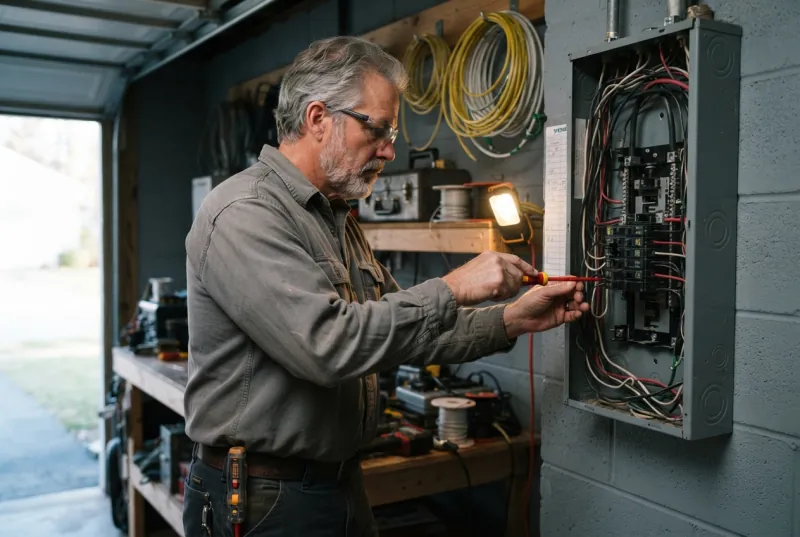
An electrician in safety glasses working on a breaker panel in a garage

Outages, panels, and new circuits

Electricians

Quote requests and callouts both arrive while you are up a ladder. The agent sorts which is which, so you know what to return first.

An HVAC technician connecting gauges to an outdoor air conditioning unit

Breakdowns and seasonal tune-ups

HVAC technicians

On the first hot or cold day of the year the phone does not stop. The agent books routine tune-ups and puts breakdowns at the top of your list.

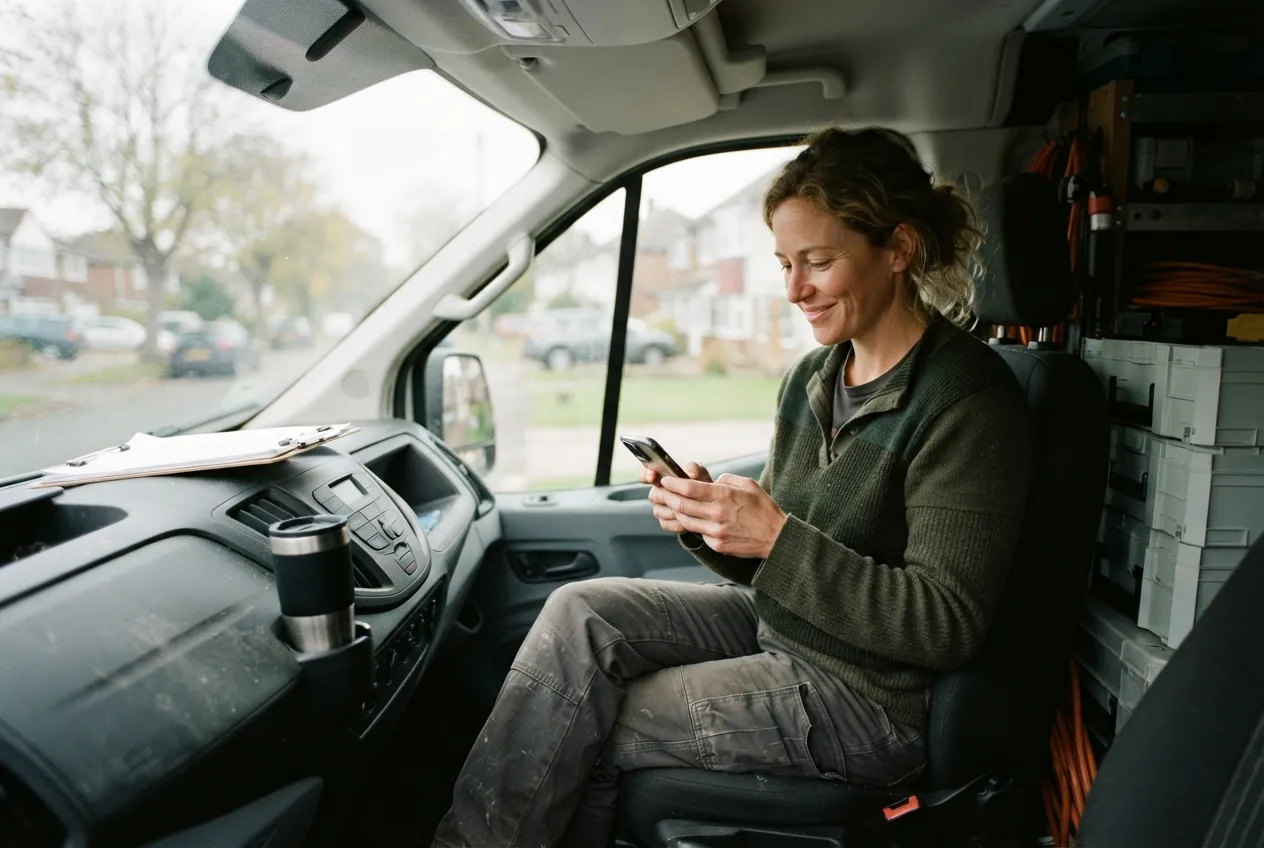
A tradeswoman sitting in her work van, smiling as she reads a message on her phone

Spend where it matters

Set up to sound like your business.

A voice agent is only worth having if callers are happy talking to it. We start by listening to what your customers usually ask, write the agent's answers together, and test it with real calls before it goes live. You always decide what it may promise and when a call should come straight to you.

  • Callers are told they are speaking with an assistant
  • Monthly calling and software costs explained up front
  • Your rules for prices, quotes, and emergencies
  • Tested with real calls before customers hear it
Talk through your situation

Anything else on your mind? Ask me directly.

Yes. The agent introduces itself as your assistant. Callers mostly want their problem heard and a time they will hear back, and an assistant that answers on the first ring does that better than voicemail.

Of course. Most people set the agent to take only the calls they do not answer, or the calls outside working hours. You can change that at any time.

Usually not. Your existing number forwards unanswered calls to the agent, so customers keep calling the number they already have.

You decide. The agent can flag it and text you immediately, try to put the call through to you, or tell the caller when to expect you back, following the rules you set.

It is the same technology set up for a different job. A voice agent for a one-person business mostly takes details and texts you. An AI receptionist for a business with staff also routes calls to the right person, answers front-desk questions, and manages bookings across a team.

Most are live within one to two weeks, depending on how many people and calendars are involved. Most of that time is writing and testing the answers, not the technical setup.

Setup is a fixed, quoted price. The ongoing cost depends mostly on how many calls the agent handles each month, and I will explain it before you commit so there are no surprises.

Voice agents are the starting point. The same approach works for follow-up texts, quote reminders, and review requests after a job. See the workflow automation page for more of what is possible.

A practical next step

A rough idea is enough. I'll help you work out the details.